

wamda.ai
ENالعربية

Wamda AI / Abu Dhabi

Sharp
Vision.

Wide-area awareness.
High-resolution attention.

Sharp Vision combines a continuous wide view with a rapidly directed detail camera. Keep the whole scene in view and capture the details needed to understand it.

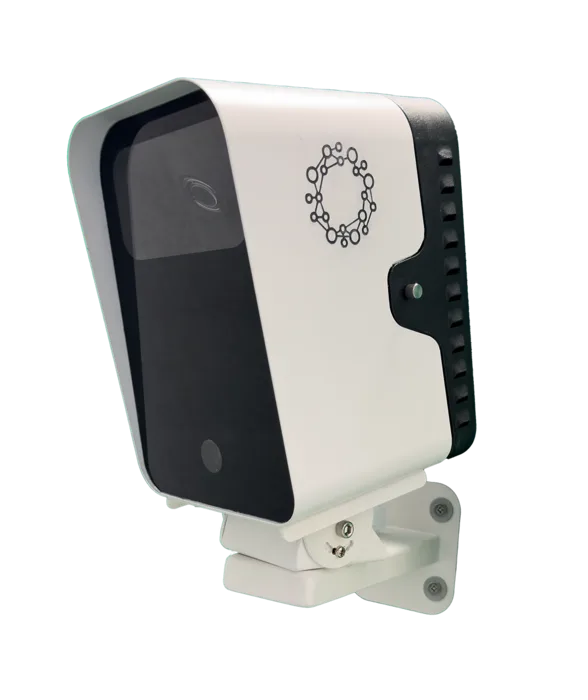
Sharp Vision camera prototype with its wide-view camera, steerable mirror and optical detail channel
Sharp Vision Actual prototype
10attention actions / secondSystem rate described by the team
2complementary viewsContinuous context + directed detail
2019founded in Abu DhabiResearch-led visual intelligence
Future 100UAE list, 2024

01 / The idea

A wider view.
A more selective focus.

A wide view preserves context. A narrow optical view captures detail. Intelligent attention decides where to look next.

Inspired by peripheral vision and the eye's detailed central vision, Sharp Vision combines scene understanding with physical camera or mirror steering. The hardware captures detail; the attention system decides where and when to capture it.

  1. 01

    Observe

    Maintain the wide scene and track subjects in context.

  2. 02

    Attend

    Choose a subject, location and useful capture moment.

  3. 03

    Capture

    Direct the optical detail channel to that part of the scene.

  4. 04

    Connect

    Associate sharp evidence with its subject and timestamp.

02 / Experience intelligent attention

See the crowd.
Focus where it matters.

Wide awareness. Selective attention.
Useful detail.

Keep the crowd in view while attention prioritises selected events. This recorded-scene demonstration shows how one detail channel can spend more time on what matters.

TOKYO STATION / Recorded sequenceLoading footage & tracks

Percentages are illustrative attention priorities, not judgments about the people shown.

Adjust the demonstration

The full picture

RECORDED SCENE
Recorded footage Simulated priorities
Preparing track correspondence00:00.00

Movement & attention

ILLUSTRATIVE PLAN
Recorded trail Fixed lead-in Selected
Normal-speed replay · 2.8-second source excerptSession 00:00
People tracked in view--
Priority tracks captured0
Shared attention rate10 / sec
In focus--

Selected person

NO SELECTION
Whole-person detail
Same-track head detailSame-track reconstruction · illustrative detail
Awaiting attention
Track
--
Demo priority
--
Attention
--

Illustrative capture quality. Not verified identity or measured camera output.

Select a capture to inspect.

Capture feed

0 CAPTURES
Five priority tracks, with context checks. New captures scroll below; select any row to inspect.

New captures will appear here.

Explore all tracked people

Anonymous tracks

Select any track for manual attention.

Choose a person to compare the generated farther-walker demonstration with the closer walker's enhanced recording. Automatic attention keeps its still captures.

Illustrative Sharp Vision experience. Tracking uses a looping 2.8-second recording. Priority percentages are assigned for the demonstration, not assessments of people's behaviour. Body and head views use the same track reference; reconstructed facial detail is illustrative, not verified identity. Rear-facing views remain rear-facing. Solid lines show recorded movement; dashed lines illustrate earlier paths. This concept does not verify optical capture quality, behaviour-detection accuracy or deployment capacity.

03 / The technology

Fast movement is only
half the story.

The right subject.
The right moment.
The right detail.

Hardware-level attention

A wide-view channel preserves the scene while the narrow-view channel is physically directed using active camera or mirror steering. This gathers optical detail at capture time, rather than enlarging pixels from the overview.

The team has tested fixed optical configurations with 10° and 5° horizontal fields of view. The narrower configuration offers greater magnification with a smaller field, selected for the application.

Learned attention

Deep learning and reinforcement-learning research inform how visual attention can be trained around a task. A controller can learn where to look, when to revisit, and which observation is useful.

For example, a person turning toward the camera creates a different capture opportunity from a person facing away. A visible number plate presents another. Training objectives and data determine the resulting behavior.

Connected evidence

Hotspot mode produces separate focused recordings for selected locations. Object-based operation links the wide-view timeline to subject metadata and associated detail images or clips.

During review, selecting a tracked object can reveal its captured detail alongside the original context. The observation time remains part of that evidence.

How attention can be trained

Observe and define the task

Visual observations, target state and camera orientation form the controller's inputs. A task defines what makes a useful observation, such as a face directed toward the camera.

Learn through feedback

The published research describes deep-learning and reinforcement-learning approaches. A policy receives feedback for useful attention decisions and learns actions over repeated training episodes.

Evaluate in the physical loop

The learned policy must be evaluated with actual optics, steering, timing and task data. The browser experience above demonstrates the scheduling principle with a transparent rule-based policy.

Understanding the trade-offs

Distributed, continuous detail

Multi-sensor systems use several optical views to capture different parts of a scene concurrently. They prioritize simultaneous spatial coverage.

Selective, time-shared detail

Active vision shares a detail camera across subjects over time while maintaining a separate overview. As more subjects need attention, each may be revisited less often. The required image quality and revisit interval determine whether the configuration fits the task.

Match the system to the task

Neither architecture removes optical limits. Range, target size, lighting, occlusion, motion, shutter and the required evidence determine the configuration and validation.

04 / Intellectual foundation

Research, ideas
and the people behind them.

The foundation is intellectual property and founder expertise.

Wamda's work brings together visual intelligence, active optics and task-driven attention, with a research lineage documented in published patent material.

Granted UAE patent

AE P8326 B1

Active Vision System
for Achieving Sharp Vision

A registered UAE patent for active vision combining a foveal view, deep-learning attention and camera control. The registration names Dr. Abdul Rahman and Dr. Nishanth as inventors.

Registered & published
17 April 2025
Application
P6002246/2022
Filed
31 October 2022
Inventors
Abdul Rahman Abdul Ghani
Nishanth Koganti
Applicant
Fovea Technology L.L.C.

United Arab Emirates Ministry of Economy · Patent Registration (B1)

Original registration · First page
Earlier international research publication

Intelligent vision system and methods

WO2020075147A1 · Published 16 April 2020

The earlier PCT publication names Mohamed Somer and Abdul Rahman Abdul Ghani as inventors, with Fovea Technology as the original applicant. It is separate from the UAE registration featured above.

Read the earlier publication

This reference is a published application, not a statement of current enforceability.

Filing in preparation

The next evolution of Sharp Vision

A further PCT application is being prepared for the next stage of the technology. Filing has not yet been confirmed.

The roadmap explores new optical arrangements and broader directional coverage, without disclosing unpublished enabling details.

Founder-led technology

Research depth.
Shared technical ambition.

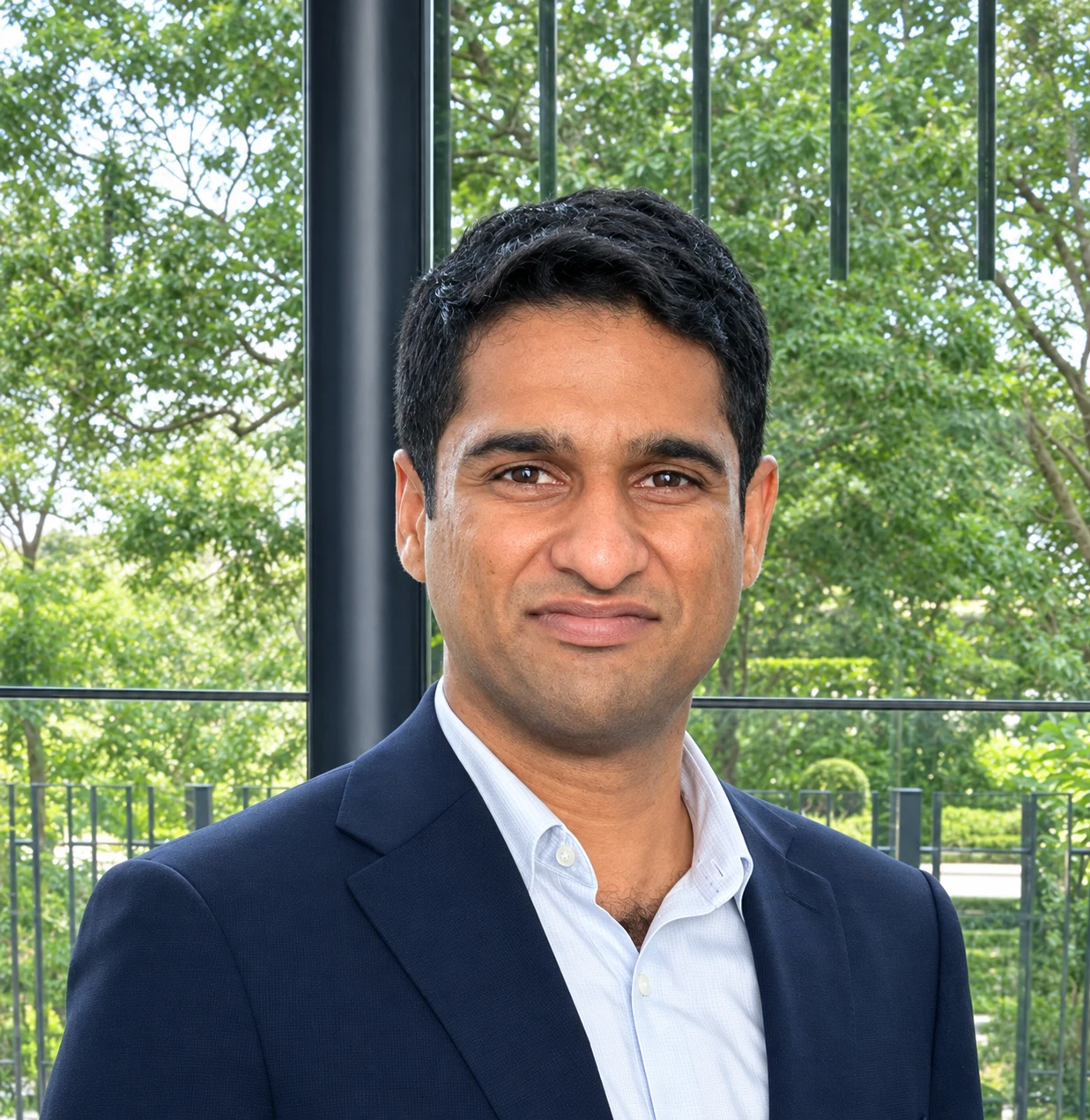
Dr. Abdul Rahman Abdul Ghani in traditional Emirati attire

Co-founder & CEO

Dr. Abdul Rahman
Abdul Ghani

AI and product leadership, computer vision and technology commercialization across Japan and the UAE.

Background

Dr. Abdul Rahman holds a master's degree and a doctorate in engineering from the University of Fukui. His work spans computer vision, neural networks, multi-camera tracking and 3D reconstruction.

His background includes research at the Petroleum Institute in Abu Dhabi, work at Universal Robot Co. in Tokyo, and leadership in computer vision at ExaWizards. He founded Wamda AI in 2019, building on a record of international publications and patent work.

Full profile
Dr. Nishanth Koganti, co-founder and CTO

Co-founder & CTO

Dr. Nishanth
Koganti

Machine learning, robotics and visual attention, connecting research methods with practical intelligent systems.

Background

Dr. Nishanth holds a doctorate in Information Science from the Nara Institute of Science and Technology. His academic background includes postdoctoral research at the University of Tokyo and an assistant-professor role at NAIST.

His work spans reinforcement learning, imitation learning and robotics. He co-authored the 2018 research on efficient neural attention systems for human-level Sharp Vision with Dr. Abdul Rahman and collaborators.

Research profile
Shared research · Designing Efficient Neural Attention Systems · ICLR 2018 workshop
Founding team

Built on complementary expertise.

The three co-founders are listed in the UAE Future 100 report.

01 / Co-founder

Abdul Rahman Abdul Ghani

02 / Co-founder

Nishanth Koganti

03 / Co-founder

Mohamed Al Mazrouei

Source · Future 100, 2024 · Wamda AI profile

05 / Development path

A platform for
what comes next.

Extend the same attention principle
to new optical arrangements.

01 / Foundation

Active-view prototype

Wide-view awareness, directed detail, tested 5° and 10° optical configurations, and hotspot and subject-based workflows.

Prototype & demonstrations
02 / Development concept

Forward + backward

Explore attention across front and rear viewing directions for tasks that need context on both sides.

Roadmap · Not a released product
03 / Development concept

360° attention

Explore surrounding awareness with selectively directed high-resolution capture across a broader field.

Roadmap · Validation required

Roadmap concepts are subject to optical design, engineering, funding, patent filing and application-specific validation. No release date or range guarantee is implied.

Development direction / Aerial awareness

From visual cues
to aerial context.

A future direction for drone observation
and operator-led visual confirmation.

Keep the wider scene in view while directing optical detail to the next useful observation. Begin with a controlled ground pilot, then assess integration with unmanned platforms.

Concept film · 2:06 · English AI narration. Scenes, distances and confidence scores are illustrative, not measured flight-test results or product specifications. No customer endorsement or partnership is implied.

Concept & evaluation path

Wide awareness.
Priority visual observations.

Use wide-view or external track cues to direct sharp optical capture where it matters. Time- and track-linked observations can help operators confirm a target visually, revisit changes and review the evidence.

Potential uses: rooftop airspace awareness, visual confirmation from unmanned aircraft, and maritime or ground-scene monitoring. One attention principle, tailored to each platform.

01

Validate on the ground

Start with a stationary sensor, controlled targets and an agreed observation task. Evaluate evidence quality and attention timing.

02

Evaluate the payload

Assess optics, stabilization, mass, power, vibration and environmental requirements before considering airborne use.

03

Connect to the operator

Keep timestamped images, track context and review history together. No autonomous engagement or mitigation capability is claimed.

Development concepts only. The film does not establish detection range, classification accuracy, airborne readiness or platform integration. Performance requires application-specific testing.

06 / See the work

From principle
to demonstration.

Original Wamda footage.
Context alongside detail.

Original shared video on YouTube
Hardware demonstration / 1080p

One overview.
Five selected hotspots.

The original recording shows focused views associated with selected regions in the wide scene. A visitor can compare context and detail directly.

The historical video is labelled 3 fps FHD streams, 10° detail field of view and 100° coverage. Those labels describe that recording, not a universal product specification or the simulator's 10-actions/s setting.

Explore intelligent attention

Original demonstration with a new English AI voiceover. The recorded interface is in English.

System demonstration

Overview, attention and detail

Review a recording, select a tracked person and view the detailed images captured for that track. This walkthrough shows the original operator interface.

Open the full video

07 / Visual intelligence

One vision.
Connected capabilities.

The Wamda portfolio connects
seeing, understanding and acting.

SharpVision

Active optical attention

The camera platform brings wide-area awareness and directed high-resolution capture together for open and complex spaces.

Explore the technology

IdentiFace

Identity intelligence

Facial-recognition capability designed to integrate with existing infrastructure for authorized security and personalized experiences.

BehavioTrack

Motion understanding

AI-powered motion tracking for dynamic environments, supporting situational awareness, safety and operational analysis.

PreSense

Pattern-driven insight

Behavioral-pattern analysis to support earlier awareness and better-informed decisions. Use cases require task-specific validation.

Performance figures from earlier configurations
100×More coverage
10×Face identification enhancement
50%+Attention tracking
60%+More accurate

Performance depends on the optical configuration, application, site conditions and comparison baseline. The appropriate configuration and performance targets are agreed during evaluation.

08 / Application areas

Different environments.
The same need to understand.

Smarter, safer environments
through visual intelligence.

These five areas describe potential applications, not confirmed deployments or guaranteed outcomes. Each requires application-specific validation, lawful use and appropriate privacy safeguards.

01

Law enforcement & public safety

Support situational awareness, investigations and response with authorized identification, movement context and event analysis.

  • Facial recognition for lawful identification workflows
  • Alerts for defined events and unusual movement patterns
  • Motion tracking for improved scene awareness
02

Education

Explore visual signals that can support classroom and remote-learning research, with consent and appropriate safeguarding.

  • Engagement and attention-pattern analysis for adaptive teaching
  • Classroom attention insights for educators
  • Interaction tracking for remote learning
03

Manufacturing facilities

Combine movement and operational context to explore safer, more efficient production environments.

  • Employee movement and workplace safety
  • Equipment-condition monitoring and fault-prediction use cases
  • Workflow analysis to reduce disruption and downtime
04

Retail

Understand store activity and customer journeys while respecting identity, consent and retention requirements.

  • Authorized identity-based personalization
  • Shopper behavior and layout optimization
  • Inventory, theft detection and loss-prevention workflows
05

Healthcare

Explore patient movement, staff allocation and facility security. Clinical or distress-detection claims require separate evidence.

  • Patient movement and potential distress indicators
  • Predictive workflow and staff-allocation analysis
  • Hospital security and situational awareness

09 / About Wamda AI

Vision like
never before.

Research-led visual intelligence,
rooted in the UAE.

Wamda AI specializes in visual intelligence for tracking, identifying and understanding activity. Our ambition is to transform conventional surveillance into useful, connected observations that support safer, smarter environments.

We work toward a future in which visual data supports timely, informed decisions across cities, security and industry. From the Sharp Vision hardware to attention research and software, that ambition is grounded in engineering.

Innovation

Push the boundaries of AI and computer vision to solve meaningful problems.

Integrity

Build trust through ethical practice, transparency and accurate claims.

Collaboration

Bring clients, researchers, partners and stakeholders into shared progress.

Excellence

Pursue rigorous engineering and thoughtful service in everything we develop.

10 / Milestones & news

Part of the conversation.

Wamda AI channel
Recognition / 2024

Wamda AI in the UAE Future 100

Wamda AI was selected for the UAE's Future 100 List 2024, recognising companies with the potential to help shape the country's future economy.

View the official listing
Media / 2022

Sharp Vision on Abu Dhabi TV

Dr. Abdul Rahman introduces the technology in an archived Abu Dhabi TV appearance, originally shared under the Fovea Technology name.

Watch the original appearance

11 / Start a conversation

Build the next
vision with us.

Technology licensing. Co-development.
Integration. Application-led pilots.

Tell us about the environment, the detail you need and the decision it should support. We can explore the right direction together.

info@wamdaai.com +971 58 112 1629

Abu Dhabi, United Arab Emirates

Office M4, M Floor, C3 Building
357 Al Mabrouk Street, Khalifa City
View map

For technology, integration and partnership enquiries.

Opens your email app. This website does not submit or store your message.

Demonstration

Open directly on YouTube

UAE Patent Registration · AE P8326 B1

Original first page · Registered 17 April 2025

First page of the granted UAE patent registration, AE P8326 B1
Open full-size original page